
Surviving the drylands: Stone tools as evidence of early social networks
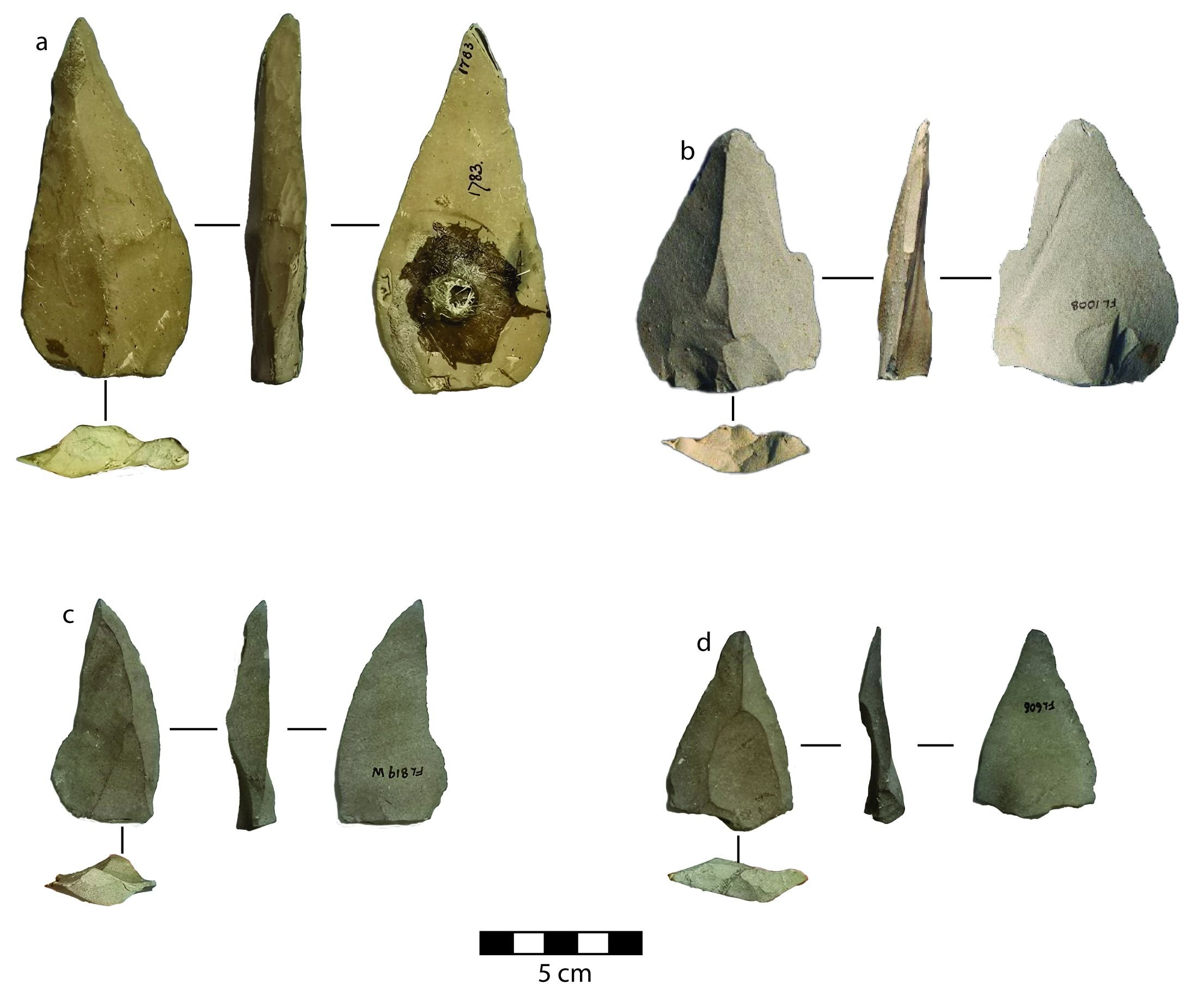
Imagine standing in the vast Kalahari Basin, where the sun beats down on endless dry landscapes. It may seem like a tough place to live, but thousands of years ago, early humans called it home. And they weren’t just surviving this harsh landscape — they were connected, sharing knowledge and skills to help each other thrive.
How do we know this? The answer lies in their stone tools. Crafting these tools wasn’t just about shaping rocks. It was a complex skill, likely passed down from expert to novice over generations and between groups.
“These tools reveal a network of knowledge-sharing and connection among ancient communities that set the stage for the characteristics we carry today,” says Dr Precious Chiwara-Maenzanise, a postdoctoral research fellow at the Human Evolution Research Institute (HERI).
Exchanging knowledge and ideas
In a recent study led by Chiwara-Maenzanise, co-authored by Yonatan Sahle, Jayne Wilkins and HERI’s Benjamin Schoville, findings from the Kalahari challenge long-standing beliefs about human interaction in the past.
Published in the Journal of Human Evolution, the research shows that during the Marine Isotope Stage (MIS), 130,000-74,000 years ago, populations in the Kalahari were not as isolated as previously thought.
For years, researchers believed that during this time, human groups in southern Africa had little contact between communities. However, the study comparing stone tools from archaeological sites at Ga-Mohana Hill North Rockshelter and White Paintings Rockshelter in the Kalahari, as well as nearby regions such as Florisbad and Erfkroon, tells a different story.
The stone tools uncovered at these sites share striking similarities in their manufacturing techniques and final forms. This suggests the active exchange of knowledge and ideas among individuals, rather than being cut off from one another.
Unlike other regions in southern Africa that experienced fragmentation during interglacial periods, the Kalahari and surrounding areas exhibited greater connectedness during this time. By maintaining shared traditions, early human groups were able to pass down crucial survival knowledge, helping them adapt and thrive.
Bringing the past to life
Stone tools tell us more than just how early humans crafted objects — they reveal how individuals connected, shared knowledge, and supported each other in challenging environments. This research compels us to rethink past assumptions about human isolation and instead appreciate the resilience and adaptability of our ancestors.
And there is more to discover about these connections. For Chiwara-Maenzanise, the next phase of research will focus on how Early and Middle Stone Age inhabitants sourced raw materials, tracing the provenance of stone tools to understand whether and how patterns of material use and technological choices changed over time, reflecting shifts in social networks, mobility, and knowledge exchange.
“We also want to compare these two temporal periods and see how technological patterns and material sourcing may have evolved in the Kalahari, revealing changes in how people connected and shared information,” says Chiwara-Maenzanise.
Continuing that work in the Kalahari is not without difficulty, especially where the extreme heat and dry conditions make excavation challenging. But Chiwara-Maenzanise says careful planning, teamwork, and local knowledge will prepare them for the challenge.
“Even in the toughest conditions, early humans in the past found ways to survive. That’s something we can still relate to today,” she says.