
How ICP-MS and XRF methods help us understand early human behaviour
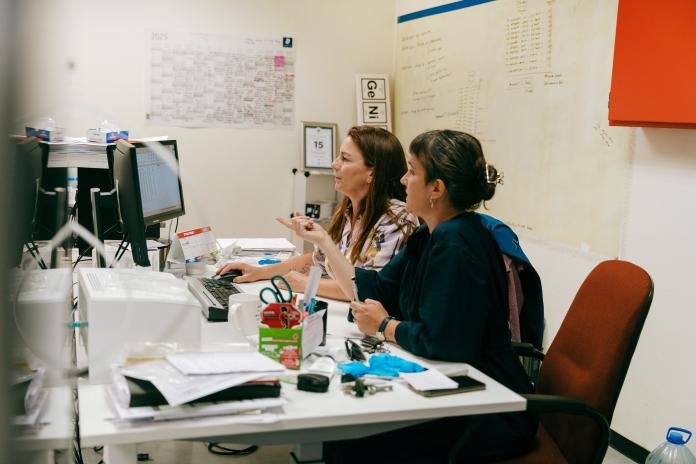
HERI accesses cutting-edge major and trace element analysis methods available in the Department of Geological Sciences at UCT,
At first glance, a stone tool may look simple. It is a piece of rock shaped by human hands. But it holds hidden information that researchers can use to answer questions about our past.
Inside each stone tool are tiny chemical traces that can reveal where the stone came from and how people lived long ago. By studying these traces, researchers can learn how early humans used natural resources and moved across the landscape.
Within the Human Evolution Research Institute (HERI) at the University of Cape Town (UCT), this work combines archaeology and geochemistry. Researchers apply advanced major and trace element methods available in the Department of Geological Sciences, including quadrupole ICP-MS and Panalytical Axios XRF.
“The fact that we can use geochemical techniques, such as high-resolution trace and major element mapping, to answer fundamental questions about early modern human behaviour is a huge benefit for our researchers,” says HERI Co-director Associate Professor Robyn Pickering.
“Not only does it build their capacity in data collection and analysis, but it prepares them to be leaders in interdisciplinary research rooted in Africa.”
From the landscape to the lab
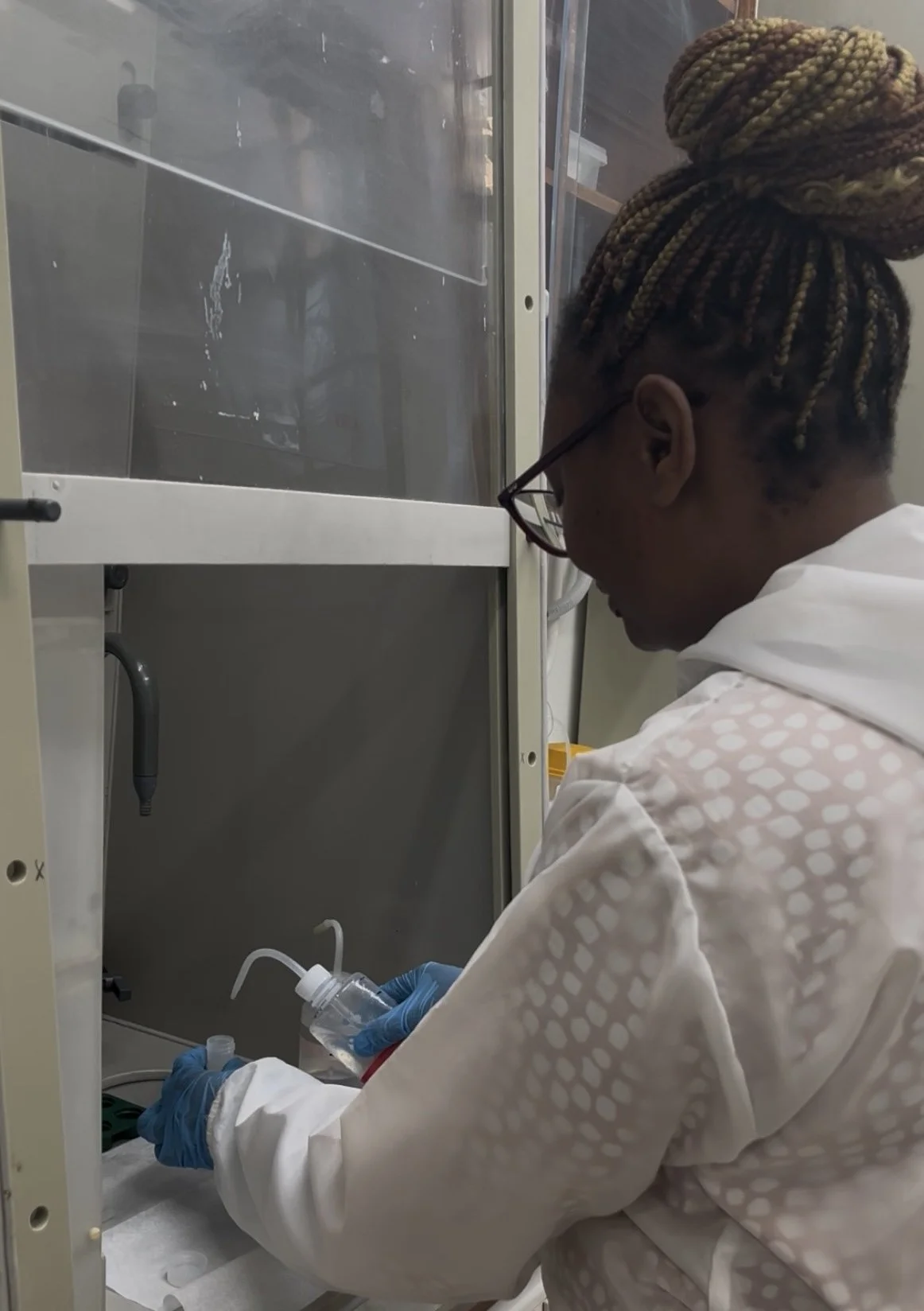
HERI's Dr Precious Chiwara-Maenzanise prepares and analyses geological samples, which are crushed together with stone tools, using a quadrupole ICP-MS technique.
Stone tools were a key part of how early humans survived. They were used to cut meat and plants, prepare food, work with animal skins, and shape wood. However, not all stones were equally useful. Some stones broke unevenly and were hard to shape, while other stones fractured cleanly and were easier to turn into tools.
Because of this, early humans had to make choices. They could use stones found nearby that were difficult to work with, or they could travel farther to collect better material. These decisions required both careful thought and familiarity with the environment.
The research begins in the field, where HERI postdoctoral researcher Dr Precious Chiwara-Maenzanise identifies and records stone outcrops across the landscape. She then collects samples from natural sources.
Chiwara-Maenzanise works closely with Chief Scientific Officer Christel Tinguely to prepare and analyse these selected geological samples, which are crushed together with stone tools, using a quadrupole ICP-MS technique. For XRF analysis, samples are sent to Professor Phillip Janney for analysis.
Techniques such as ICP-MS and XRF measure the chemical elements within the powdered material. Instruments like the quadrupole system separate elements by mass and record their amounts, producing a detailed chemical profile for each sample.
Because each rock forms under specific conditions, it carries a distinct chemical pattern—often described as a fingerprint.
Once these chemical “fingerprints” of stone tools and natural rock sources are identified, Chiwara-Maenzanise compares them. When the fingerprint of a stone tool closely matches that of a known source, it indicates where the raw material was obtained.
This process is repeated across a wide area, with analysis of many potential rock sources and comparisons to a representative sample of tools from archaeological sites.
This allows Chiwara-Maenzanise to build a detailed picture of how far people travelled to obtain stone, whether they repeatedly used the same sources, and the types of materials they preferred. Patterns like these help explain how early humans moved across landscapes, organised their daily lives, and how these behaviours may have changed over time.
Research in the Tswalu Kalahari
Chiwara-Maenzanise’s research project is based in the Tswalu Kalahari Reserve in South Africa, where she and colleagues are studying stone tools made from the locally abundant quartzite, which formed about one billion years ago and makes up the hills that dominate the landscape.
Her work has divided this quartzite into several different sub-types: some are coarse and rough, while others are finer-grained and easier to shape. There are also visual differences between the types of quartzite. Some are dark purple grey, while others are light grey.
A key aim of Chiwara-Maenzanise’s work is to understand which quartzite types early humans preferred and where they collected their stone from. But it is not enough to do this using visual tools.
She must analyse the chemical signatures of these source rocks, in order to build a local chemical map. She can then compare the stone tool results to this, and pinpoint where the artefacts are sourced from.
Chiwara-Maenzanise’s early results demonstrate how early humans planned, moved, and made decisions. Transporting stone over a distance shows foresight and effort, key traits of human adaptability.
While her findings are still being prepared for publication, the research demonstrates how powerful geochemistry can be for studying early humans.
Work like this underscores the vital role of modern scientific techniques in enabling African researchers to conduct cutting-edge research on artefacts and fossils from the continent.
“As an archaeologist, I never expected to spend so much time working in a geochemistry laboratory. But it has been incredibly rewarding to apply these methods to archaeological questions and learn new skills,” says Chiwara-Maenzanise.
“I am proud to be affiliated with an African institution that enables this kind of analysis to be carried out, and supports African researchers contributing to and leading this work on the continent.”