
HERI supports pan-African collaboration with the PANACHE field exchange to Laetoli
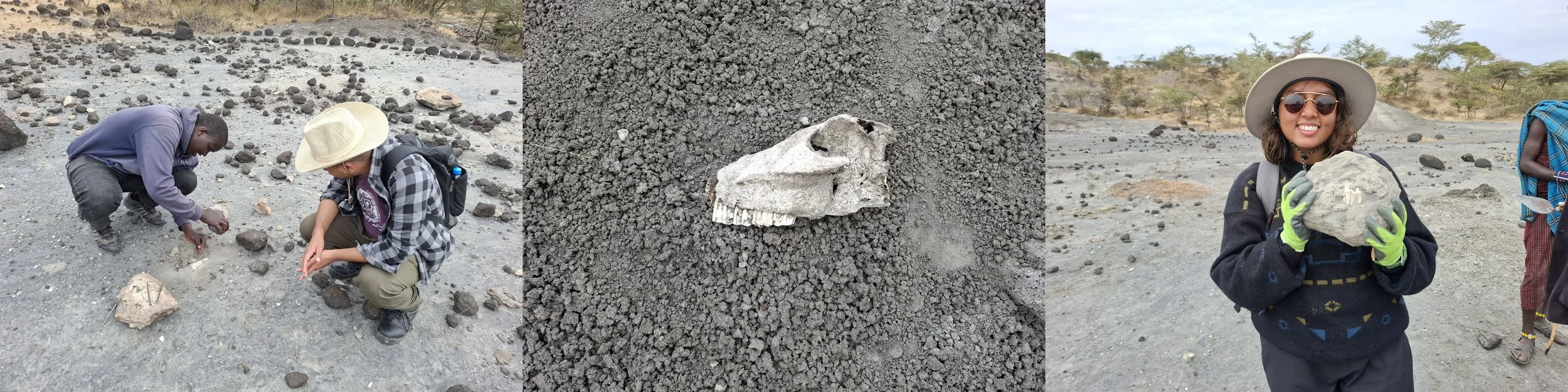
Two HERI master’s students, Akira Banwari and Keane Wanza, received funding from the Pan-African Consortium for Human Evolution (PANACHE) to participate in the 2025 field season in Laetoli, Tanzania.
The initiative brings together researchers from institutions in Africa and African scholars from the diaspora. Collectively, they aim to build a continent-wide network that fosters collaboration and places African scholars at the centre of research on human evolution globally.
Managed by HERI, the PANACHE training network offers African students structured training, cross-institutional mobility, and collaborative research opportunities - locating itself fully within Africa, to serve African students and researchers first.
“We are truly grateful to the Wenner-Gren Foundation for funding this initiative, which is allowing us to give African students unprecedented opportunities to build Africa-centric networks that will benefit them in their future careers” says HERI Co-director Rebecca Ackermann.
The Laetoli student exchange was facilitated by Dr Issac Onoka from the University of Dodoma, Dr. David Mrisho from Saint Augustine University of Tanzania, and Professor Charles Musiba from Duke University.
“PANACHE serves as a platform for true collaboration and will foster the next generation of human evolution experts that look at the continent as whole, rather than the existing regional divisions that exist today,” Musiba says.
For Banwari and Wanza, it was their first time participating in this type of fieldwork and they gained a lot from the experience, both academically and personally. The interview below shares their insights and takeaways from the trip.
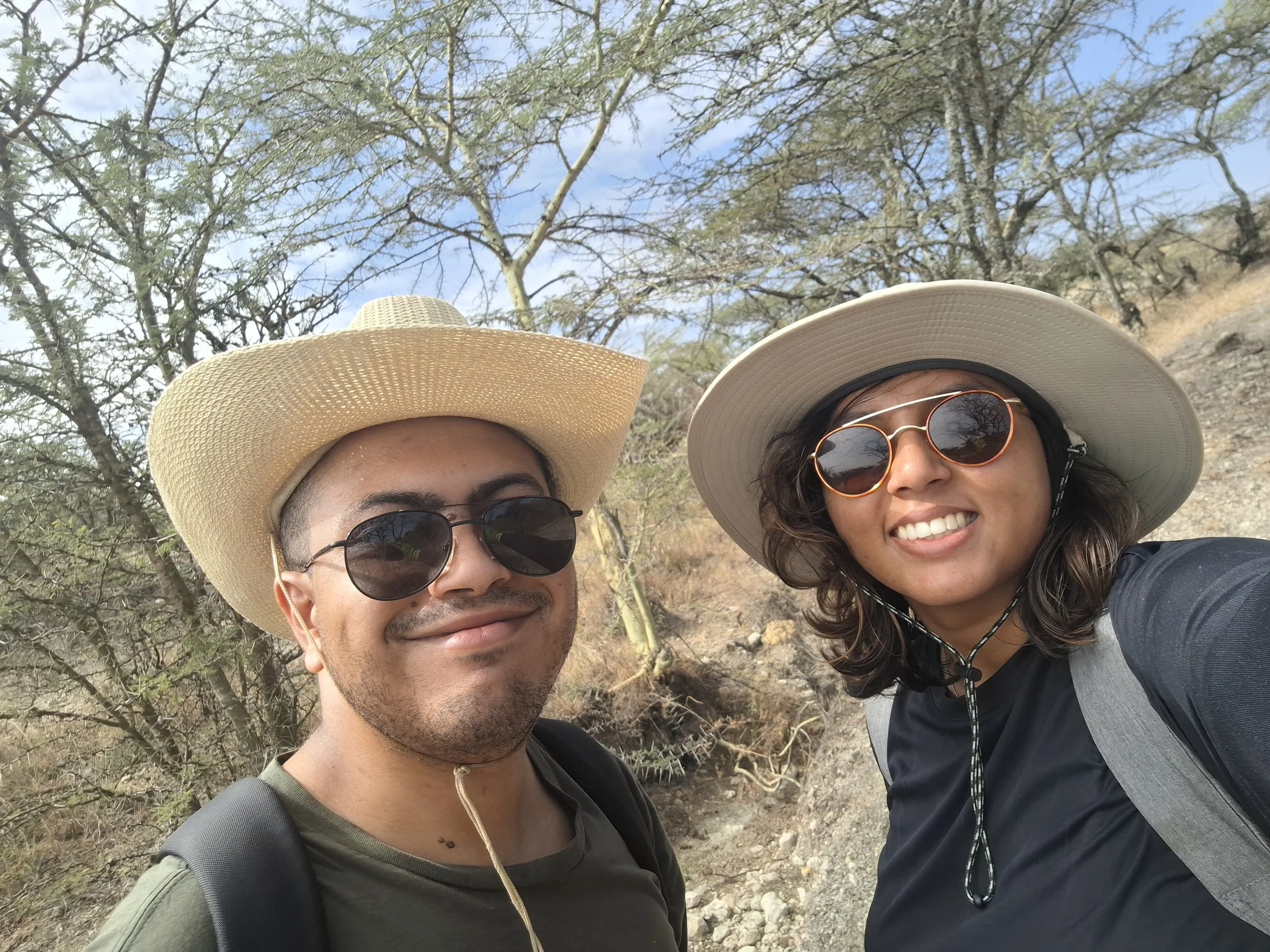
HERI master’s students, Akira Banwari and Keane Wanza, participatingin the 2025 field season in Laetoli, Tanzania
Why is Laetoli, Tanzania significant for human evolution?
Keane Wanza (KW): Laetoli is famous for having some of the earliest evidence of bipedalism in our evolutionary history, in the form of footprints ‘fossilised’ by volcanic ash. The focus of our fieldwork was to assess the conservation efforts at some of the sites in Laetoli, including the site of the renowned hominin footprints, as well as some other sets of footprints.
Akira Banwari (AB): Laetoli is located in the Ngorongoro Conservation Area, which is also home to the Ngorongoro Crater and an abundance of wildlife which co-exist with the Masai people. Besides the footprints, the area is also very rich in zooarchaeological material and lithics. Fieldwork largely consisted of surface surveys, as the landscape is eroding and archaeological material is unearthed every year after the rainy season.
What knowledge did you gain through the exchange?
KW: I learnt so much about each step of the fieldwork process, from determining where to perform surface surveying, to the surveying itself. Also knowing where and what to look for when trying to find fossils, including techniques for excavating them and the highly important skill of taking proper measurements and records of all finds. I was able to learn these skills under the guidance of experts in this field, who were friendly and eager to teach me.
AB: It was an incredible opportunity to learn first-hand about sites we otherwise would only read about in textbooks. I now have a better understanding of zooarchaeology, and techniques such as photogrammetry and LiDAR. I am also now more familiar with the hominins discovered in Tanzania and how this knowledge has contributed to our understanding of human evolution.
What was a memorable interaction that you had with someone in Laetoli?
AB: One of the many incredible people we met was an archaeology student named Olopiro, who is part of the Maasai community living in the Ngorongoro Conservation Area. I asked Olopiro what had drawn him to study archaeology? He explained that he and many others had grown up watching European archaeologists come to Ngorongoro and look for things in the dirt. One day, while herding cattle as a young boy, he approached one of the archaeologists to ask what they were doing, and that curiosity led him to study archaeology. It was wonderful talking to him and he taught me a lot about his culture and upbringing, but also his area of interest in archaeology, which is lithics.
What did you learn about archaeology that surprised you?
AB: We were taught that Mary Leakey and her team discovered the Laetoli footprints, but anyone in Ngorongoro will tell you that it was a Maasai leader who led her to the footprints. The Maasai have lived in this area for hundreds of years and have come across many items of archaeological significance there such as the footprints - whose origin the Maasai have their own folktales about. The son of the chief who led Mary Leakey to the footprints still lives in Ngorongoro and joined us in the field. It was incredible to be able to meet him, but also heartbreaking that so few people know about his and his father's contributions to the archaeological world. It very much shows that Archaeology's dark colonial past still has effects today.
How has this experience impacted you?
KW: Being a part of the Laetoli fieldwork exchange was an experience I'll never forget. As an up-and-coming researcher, you hope to be part of something of significance like this. And for it to possibly be the start of a partnership from which future discoveries could be made is a great honour.
AB: Talking to people in real life about everything from archaeology to our daily lives is something you cannot learn in a classroom, or even from any news source. It is character-building, mind-opening and humbling. I definitely see the world differently now from both a personal and academic point of view.