
Reflections from Kenya: How going abroad helps African researchers shape palaeoscience
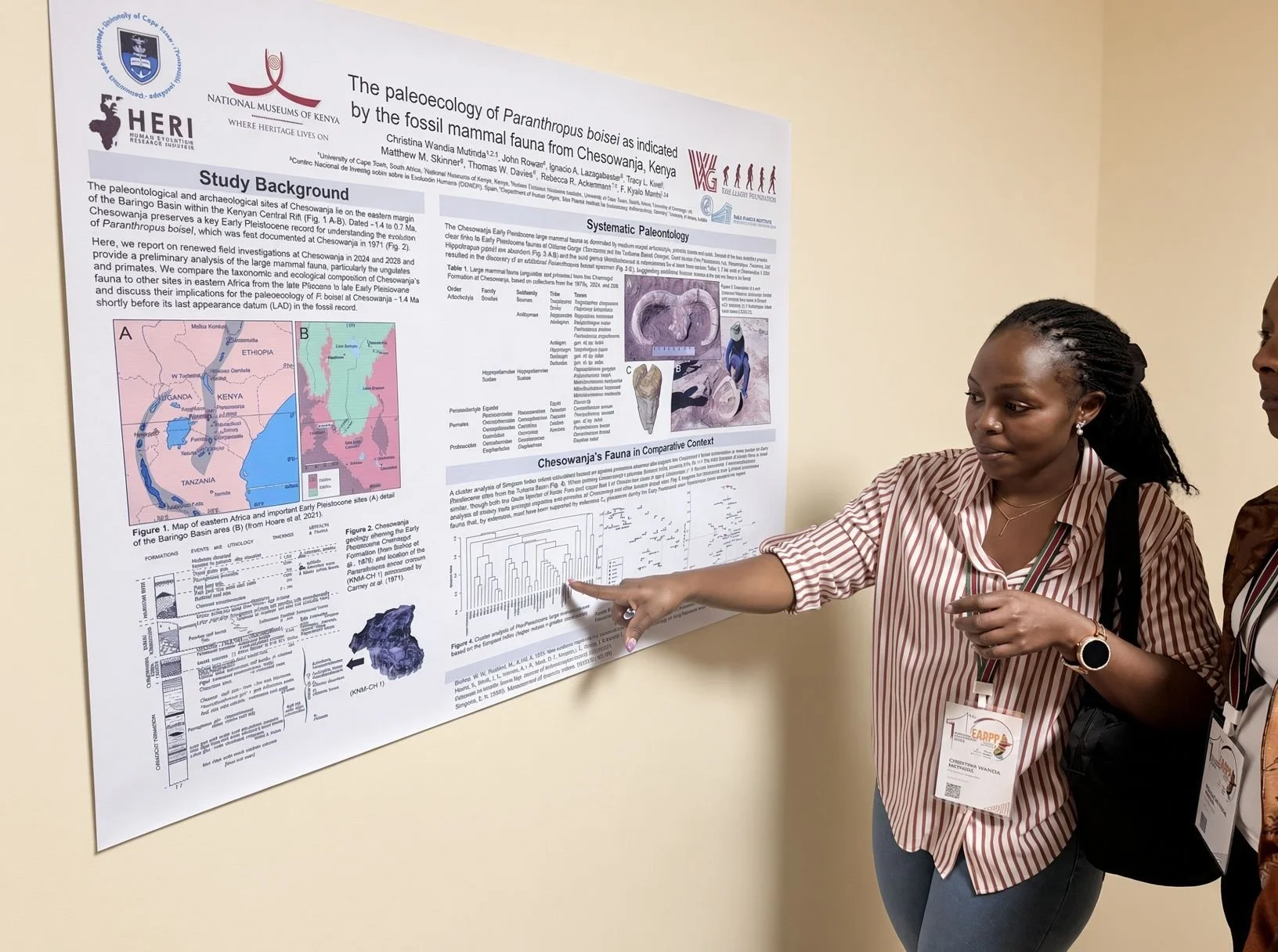
HERI PhD candidate Christina Mutinda giving a poster presentation at the 10th Biennial Conference of the Eastern African Association of Palaeoanthropology and Palaeontology (EAAPP).
For palaeoanthropologists, palaeontologists, and archaeologists working in East Africa, the Rift Valley is more than just a landscape, it is an archive of our deep past. From 26 to 30 July 2026, researchers gathered at the Sentrim Elementaita Resort on the shores of Lake Elmenteita for the 10th Biennial Conference of the Eastern African Association of Palaeoanthropology and Palaeontology (EAAPP)
Set deliberately within the heart of Kenya’s Rift Valley, just a stone’s throw from the historically significant Kariandusi Prehistoric Site. The conference provided an ideal backdrop for discussing human origins, faunal evolution, and environmental change.
As a Kenyan PhD student with the Human Evolution Research Institute (HERI) at the University of Cape Town (UCT), and a Research Associate at the National Museums of Kenya (NMK), attending EAAPP 2026 offered a powerful platform. It offered me the opportunity to share new findings, connect with other early career researchers, and engage those shaping the future of African palaeosciences.
Supported by my supervisor HERI Co-director Prof Rebecca Ackermann, with my co-supervisor Prof Fredrick Kyalo Manthi, this article reflects on my experience at the EAAPP conference in July, and field work I did in August in Chesowanja and with the National Museums of Kenya.
Ultimately, it tells a broad story of the impact of: driving African-led research and training that can support a future of leadership in human evolution research across the continent.
Incubator for communication and collaboration
Founded in 2005, EAAPP serves as a vital regional forum for researchers across eastern Africa. It supports sharing new discoveries, comparing fossil collections, debating scientific approaches, and discussing policy. For early-career researchers, I see it as a valuable incubator for science communication and collaboration.
At the 2026 conference, I presented a poster sharing preliminary results from our renewed fieldwork at Chesowanja—an investigation that resumed in 2024 after a hiatus of over 40 years. Focusing on large mammal fauna, particularly ungulates and primates from the Chemoigut Formation, our analysis explores taxonomic diversity, community composition, and the environmental context of Paranthropus boisei.
Dated at approximately 1.4 million years ago, Chesowanja holds evidence of one of the final appearances of P. boisei in the fossil record. By examining how these herbivores interacted with their changing landscapes, we gain critical clues into the ecological pressures faced by our ancient hominin relatives.
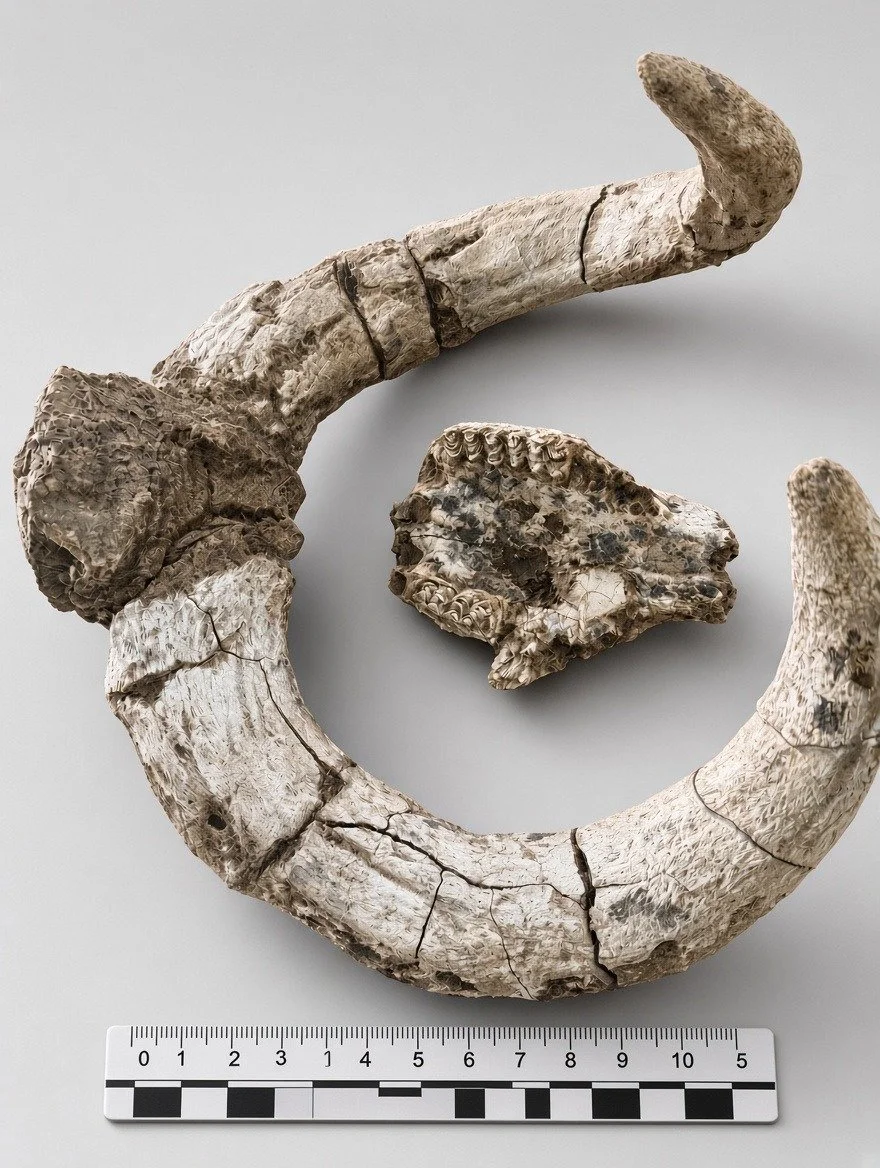
Pelorovis turkanensis frontlet with complete horn cores, identified by HERI PhD candidate Christina Mutinda and the research team at Chesowanja.
Research networking and community
The core themes of EAAPP 2026 highlighted a growing shift toward multi-proxy approaches in palaeoanthropology and archaeology. Unraveling the evolutionary histories of diverse faunal species and their ancient environments requires a multidisciplinary toolkit that combines stable isotope analysis, ecomorphological studies, and rigorous geological frameworks.
Beyond the scientific sessions, the conference emphasized the importance of research networking and community. Engaging freely with both early career researchers and senior scientists sharpened my ability to communicate complex ideas within a broader East African setting, and helped place our Chesowanja assemblage into a much wider framework.
PhD field work and skill transformation in Kenya
Fieldwork resumed at Chesowanja in 2024 after a break of more than 50 years. Since then, our team has recovered several fossils, including dental remains of Paranthropus boisei. These form the focus of my PhD.
My project is about understanding the environment of P. boisei at Chesowanja about 1.4 million years ago. The site is important because it is one of the last places where this genus was known to exist.
Importantly, this work relies on close collaboration with colleagues. For example, I am working with geologist Prof Craig Feibel, from Rutgers University, to revise the site's geology and geochronology. Recent indicators, including faunal taxonomic composition, suggest that Chesowanja may be older than previously reported.
This field research,in addition to other experiences while in Kenya including mastering fossil curation at the National Museums of Kenya and integrating multi-proxy analyses, have transformed my technical skills. Moving from basic fossil recovery to independent taxonomic and geological interpretation has been a vital part of my academic growth.
Growing as an independent, confident researcher
My academic journey has been profoundly shaped by HERI. Providing a vibrant research home at UCT, HERI offers critical mentorship, a collaborative community, and access to advanced laboratory training. This supportive environment has enabled the transition from relying heavily on supervisor guidance to operating as an independent, confident researcher.
With fieldwork underway and sample analyses progressing, the next steps for my PhD include completing stable isotope work, finalizing ecomorphological studies, and publishing revised geological frameworks for Chesowanja.
Through initiatives like EAAPP and ongoing support from HERI, African-led palaeoscience continues to chart new frontiers, and ensures the continent's rich heritage is explored, interpreted, and led by African scholars.