
From finding fossils to building African networks: HERI students reflect on Kenyan field exchange
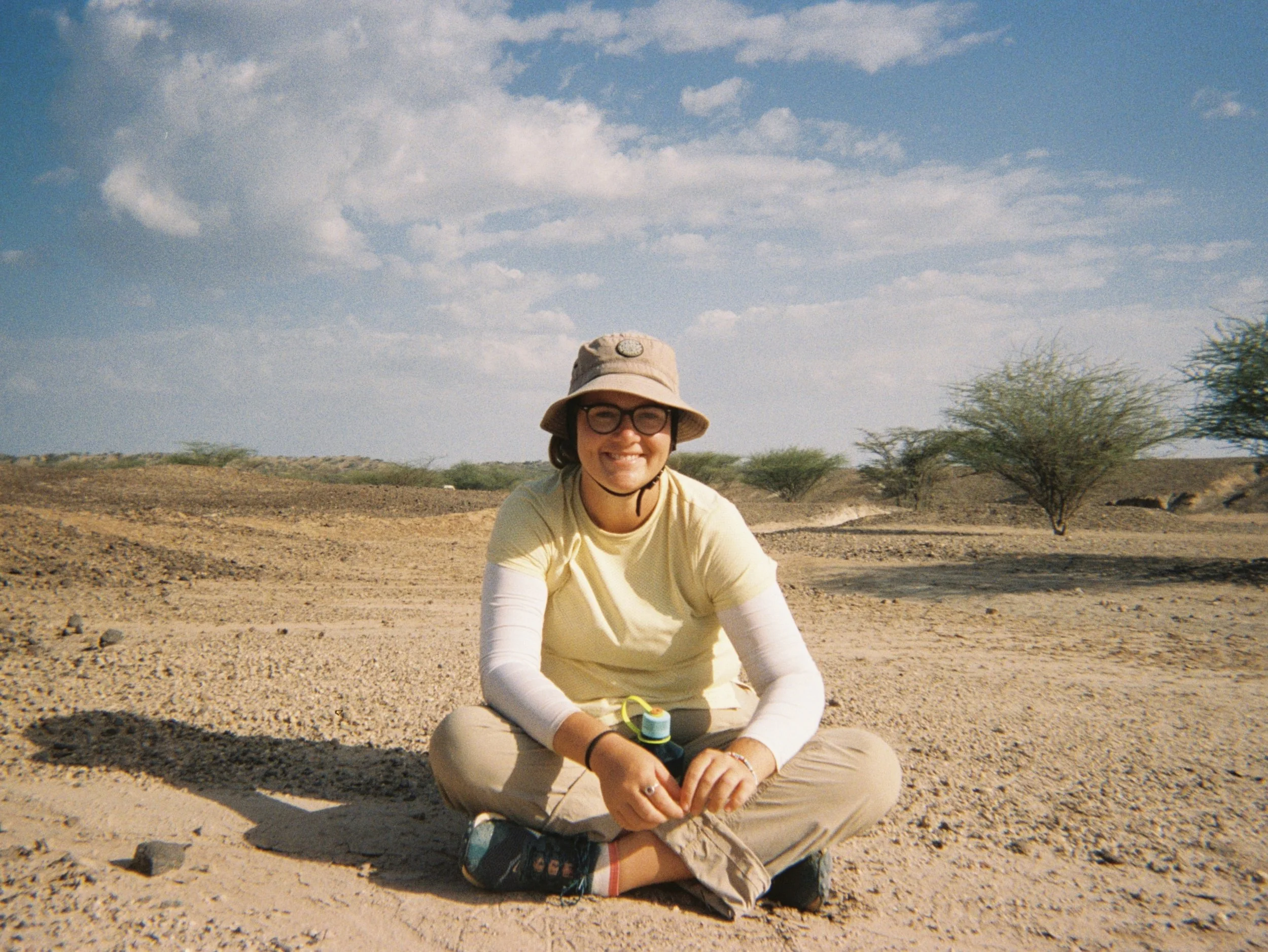
HERI master’s student Kelly-Anne Shaw travelled to Kanapoi and Chesowanja in Kenya as part of the field exchange.
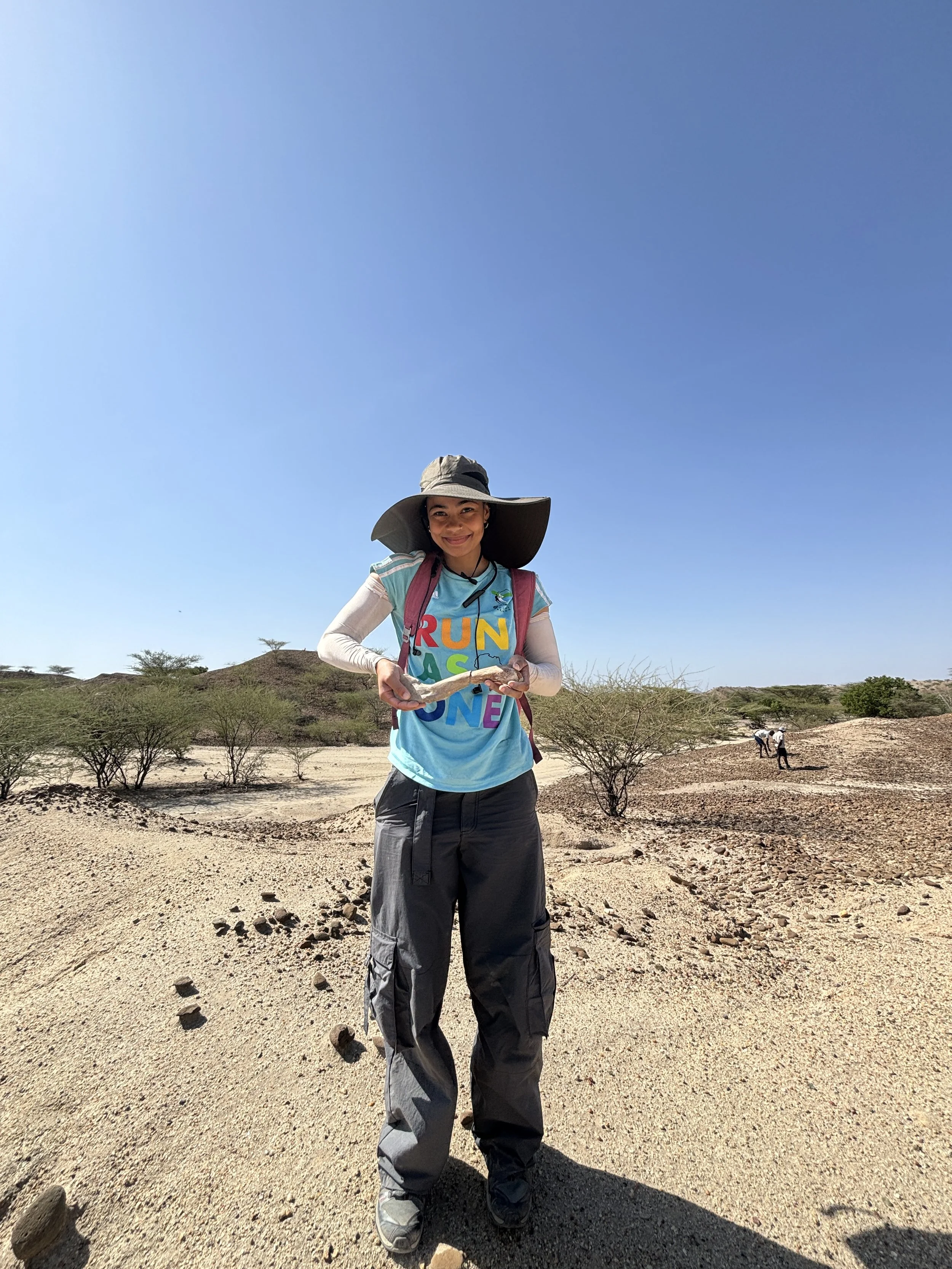
“The future of palaeoscience in Africa is African,” said HERI master’s student Kirsten Van Der Heyden who also participated.
Two archaeology master’s students from the Human Evolution Research Institute (HERI) traded the University of Cape Town campus for the East African Rift System - where they joined a Kenyan field team to recover evidence of past environments and human evolution.
Kelly-Anne Shaw and Kirsten Van Der Heyden travelled to Kanapoi and Chesowanja in Kenya as part of a student field exchange organised by the Pan-African Consortium for Human Evolution (PANACHE) training network
Under the supervision of HERI Research Associate Fredrick Manthi, from the National Museums of Kenya, Shaw and Van Der Heyden, were part of a team working to uncover fossils and to contribute to the growing faunal and anthropological assemblages from both sites.
“Hominins naturally get a lot of attention, but what is also valuable is the fauna we recover at these sites because they provide context for the environment these hominins were living in,” says Van Der Heyden.
Kenyan windows into human history
The Kenyan fossil record is one of the world’s most comprehensive windows into human history. Preserved by unique tectonic activity within the East African Rift System, Kanapoi and Chesowanja hold deep sedimentary basins that act as natural archives holding fossils, stone tools, and evidence of ancient landscapes from millions of years ago.
At 4.2 million years old, Kanapoi provides the earliest evidence of Australopithecus anamensis, which is one of the earliest known hominin species. The discovery of these fossils are especially significant because they provide evidence for very early bipedalism and demonstrate that walking upright developed much earlier than the emergence of the genus Homo.
“Kanapoi also provides a reliable chronological framework in which to place these changes in the human evolutionary record because the sediments are so well temporally constrained,” says Shaw.
Chesowanja dates to between 2-0.3 million years ago, and fossils associated with Paranthropus boisei have been found there. It is a more recently identified site that preserves a rich assemblage of stone tools that are associated with early Homo. Additionally, it preserves an environment that fluctuated over time between lakes, woodlands and more open grasslands.
Reconstructions of these environments through faunal and geological evidence has allowed researchers to explore the relationships between environmental change and tool use as well as broader technological innovation.
“Chesowanja has also yielded burnt clay that, if proven to be associated with early humans, would push the earliest known use of controlled fire back by hundreds of thousands of years,” says Shaw.
“However, the evidence for fire use at Chesowanja is highly debated, as the burnt clay could have been the result of naturally-occurring bushfires.”
Contributing to Africa-centred research
For both students, this was their first time participating in an archaeological fieldwork season. After a steep learning curve, by their second week, they were able to spot diagnostic fossils on the ground and identify them to a genus level.
“At Chesowanja, none of the fossils that I found were collected because they were not diagnostic enough. But by the time we got to Kanapoi, I found four in one day!” says Shaw. “Dr Manthi, Christina Mutinda, and the rest of the team were incredibly knowledgeable and enthusiastic teachers,” adds Van Der Heyden.
Historically - and even today to a large extent - African hominin sites have been researched primarily by Western scientists and their foreign teams and students. That the PANACHE training network can enable African students to study at African sites in different parts of the continent is an important part of shifting the norm towards a model that is more inclusive, ethical, and representative.
“Working with this team felt different. There was a deeper, shared understanding that what we were doing mattered beyond simply finding hominin fossils,” says Van Der Heyden. “There was a sense of common purpose in studying and understanding African history as Africans, from within Africa itself. For me, that was a really profound experience.”
For Shaw, exchanges like this one enable networking with other African students who are interested in closely related fields. “They remind us that the future of palaeoscience in Africa is African,” she says.
Collaboration among African institutions
PANACHE was established to develop capacity, shift narratives, and foster collaboration that reflects the diversity and complexity of our human story.
“This kind of pan-African exchange program provides an excellent opportunity for students to work with researchers from other parts of Africa thus equipping the students with unique experience/skills in field research in different geological settings, which includes, fossil prospecting, recovery and documentation,” says Manthi.
Managed by HERI, PANACHE’s training network offers students technical training with a strong emphasis on inclusive, socially responsive, Africa-centred research practice. In addition to this Kenyan field exchange, it has also enabled HERI students to participate in the 2025 field season in Laetoli, Tanzania.
“We are grateful to the Wenner-Gren Foundation for recognising the importance of supporting collaboration among African institutions through their Global Initiatives Grant to the PANACHE training network, as well as the generosity of the National Museums of Kenya,” says HERI Co-director, Rebecca Ackermann.