
Beyond the Book: Precious Chiwara-Maenzanise on voice, history, and palaeontology in South Africa
When I was invited to review a recently published book, The Untold History and Prehistory of African Indigenous Palaeontology for the South African Journal of Science (SAJS), I saw it as more than an opportunity to evaluate a scholarly publication. It was a chance to engage with important questions about Indigenous knowledge, representation, gender, and whose voices are recognised in the production of knowledge.
The invitation was also a significant milestone as an early-career researcher. My review, "Between restitution and representation: Indigenous knowledge in African palaeontology", engages with the book The Untold History and Prehistory of African Indigenous Palaeontology, which explores how African communities engaged with fossils long before palaeontology became established as a formal scientific discipline.
At first glance, a book review may seem like an academic exercise. But for me, an early-career researcher, it represented something much bigger. It was an opportunity to contribute to conversations about who produces knowledge, whose voices are recognised, and how we tell the history of science.
Indigenous knowledge, science and representation
What drew me most strongly to the book was its central argument. The authors challenge the idea that scientific understanding of fossils began with European discovery. Instead, they demonstrate that African communities have long recognised, interpreted, and incorporated fossils into their own knowledge systems and cultural practices.
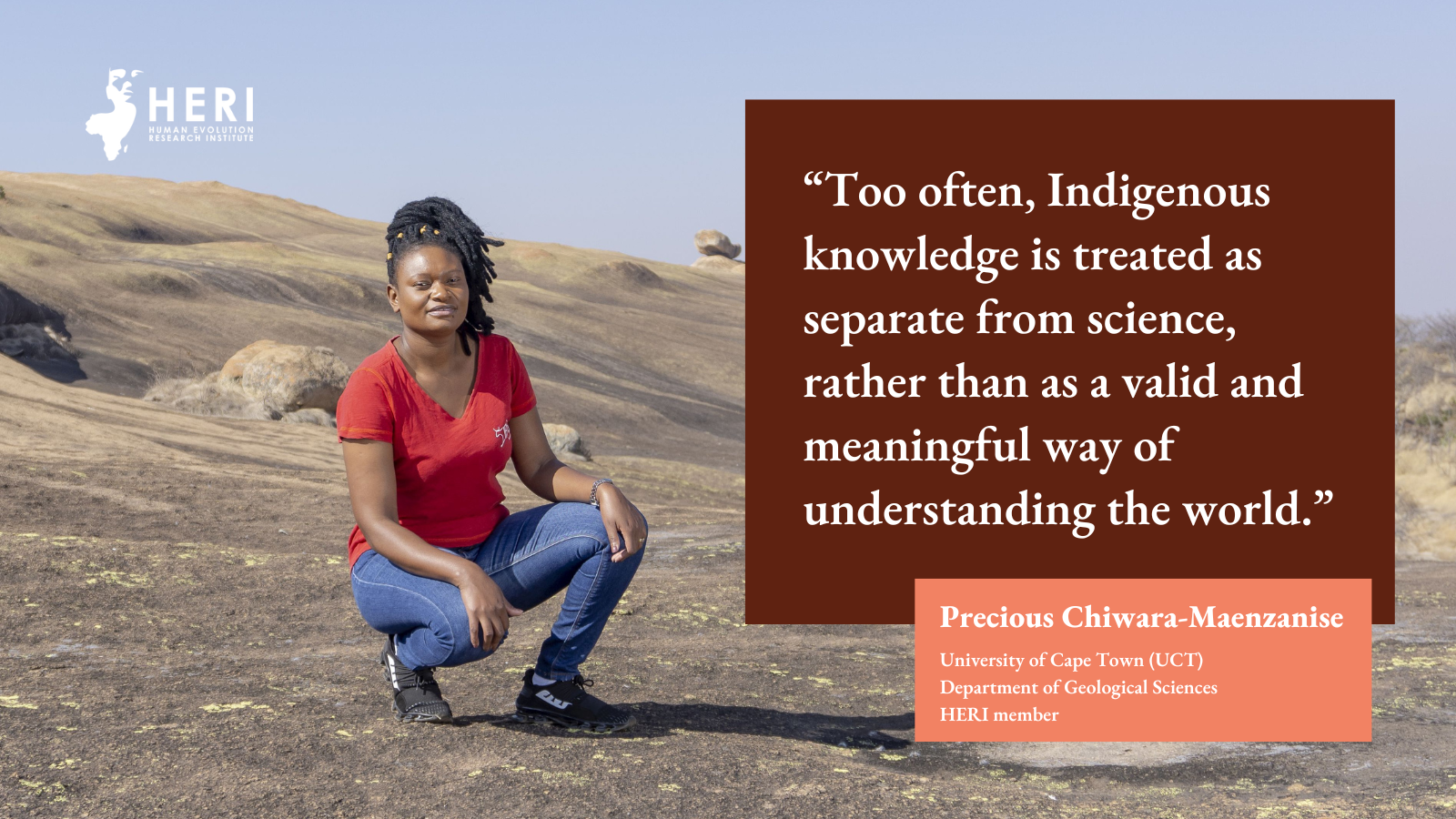
As an African researcher working in heritage, archaeology, and Indigenous knowledge studies, this resonated deeply with me. Too often, Indigenous knowledge is treated as separate from science, rather than as a valid and meaningful way of understanding the world.
At the same time, my review highlights an important tension. While the book successfully restores visibility to Indigenous knowledge and African histories, I argue that there is a difference between recognising Indigenous knowledge and sharing authority with Indigenous knowledge holders and scholars.
One of the questions I kept returning to while reading was: who gets to tell these stories, and who gets recognised as a producer of knowledge? For me, this is where some of the most important conversations in decolonial scholarship are taking place. Representation matters, but so does participation.
Why gender matters
Another issue presented in my review is one that is often overlooked in conversations about decolonisation: gender.
While the book makes an important contribution to recovering Indigenous knowledge traditions, women remain largely absent from many of the narratives presented. In many African societies, knowledge has historically been shaped and transmitted through gendered roles and responsibilities.
As a woman, and a woman of colour in academia, this point is deeply personal. Many of us continue to work in spaces where women, particularly Black women, have historically been underrepresented. If we are serious about recovering marginalised histories, we also need to ask where the women are in these stories.
Whose voices are still missing? Whose expertise remains unrecognised? And whose knowledge continues to be treated as secondary?
These questions shaped my review because they also shape my own experiences as a researcher. They are not only about the past but about the future of knowledge production.
Looking forward
Reviewing this book was meaningful not only because it connected with my interest in African Indigenous knowledge, but because it created space for me to reflect on broader questions of representation, equity, and belonging within academia.
As an early-career postdoctoral researcher, I am grateful for the opportunity to contribute to these conversations through the pages of SAJS. I hope the points raised in both the book and my review continue to encourage more inclusive approaches to knowledge production, where Indigenous perspectives, women's voices, and historically marginalised communities are not only represented but actively shape the future of research.